Monica Froese [00:00:01]:
Welcome to the Empowered Business Podcast, where strategy meets action. I’m Monica Froze and I’m here to help you create, sell and scale digital products the smart way, using AI and proven strategies to build a sustainable, profitable business. If you’re ready to turn your expertise into digital products that sell and eventually grow into a thriving digital shop, you’re in the right place. Each week I break down real world tactics, unfiltered insights and bold business moves. Because building a digital product business should be sustainable, scalable and designed for long term success. Let’s ditch the fluff, leverage AI to work smarter and turn your expertise into.
Monica Froese [00:00:39]:
A thriving digital empire on your terms.
Monica Froese [00:00:42]:
Let’s get started. Welcome back to the Empowered Business Podcast. Today we’re talking about something every online business owner is feeling right now.
Monica Froese [00:00:54]:
You know it, AI, it’s everywhere.
Monica Froese [00:00:57]:
And while it can save you time and spark new ideas, it also comes.
Monica Froese [00:01:00]:
With a huge risk losing your unique voice in the noise.
Monica Froese [00:01:04]:
My guest, Ruth Pound White knows this better than anyone. She’s a visibility, sales and mindset coach, the author of Quietly Ambitious, and host of the Soulful Sales show podcast, Ruth has helped over 7,000 business owners work through self doubt and sell in a.
Monica Froese [00:01:21]:
Way that actually feels aligned with who they are.
Monica Froese [00:01:23]:
In this conversation, we dive into how to use AI as a support tool, not a replacement.
Monica Froese [00:01:29]:
For your unique perspective.
Monica Froese [00:01:31]:
We talk about why self trust matters more than ever in the age of AI and how to sell in a.
Monica Froese [00:01:36]:
Way that honors your energy and values. If you’ve ever wondered how to balance.
Monica Froese [00:01:40]:
The speed of technology with the depth.
Monica Froese [00:01:42]:
Of human connection, this episode is going to ground you and inspire you. So let’s jump in. Ruth, welcome to the Empowered Business Podcast. I’m super excited to talk to you today.
Ruth Poundwhite [00:01:54]:
Yay.
Monica Froese [00:01:54]:
Me too. Okay, so I always like to kick off before you jump into the topic of the day for you to tell us a little bit about yourself and particularly your entrepreneurial journey and what you’re doing today.
Ruth Poundwhite [00:02:06]:
So I have been an online business owner since 2008, which is like a very long time ago. I graduated from university and I couldn’t get a job because it was recession times and I accidentally became an online entrepreneur. I was copywriting back then when Google and SEO and all that was very different back then and I did that for quite a long time, but it was never the thing that I really wanted to do. I had loads of self doubt. I had loads of issues putting myself out there and actually doing what I wanted to do because what I really wanted to do after my own journey in figuring out who I was and how I wanted to run my business and not vibing with traditional marketing advice was to help people like me to run their own businesses. And it took me years to eventually make the switch to coaching. What I do now as a business and self belief coach and I really work with a lot of people who have self doubt, low capacity, maybe chronic illness, neurodivergence, all the stuff that I’ve dealt with myself and how we run our businesses in alignment with our capacity and personality and all of that.
Monica Froese [00:03:18]:
And so how long have you been doing that for?
Ruth Poundwhite [00:03:21]:
I have been doing that since about 2019 but I officially closed the old business in 2020. So five years I’ve been doing just this. Do you which was a real milestone.
Monica Froese [00:03:35]:
Since the first business was around copywriting. What is your opinion on the relevancy of a copywriting business in the face of AI? Do you think it would have eliminated that business for you anyway? So you’re glad you made that pivot?
Ruth Poundwhite [00:03:48]:
I do think about this a lot. Of course I think there is still so much value in a human copywriter. I absolutely believe that and I see a lot of copy these days that is very generic and samey because people are clearly like copying and pasting from AI. I am absolutely not against using AI to help you with your own copy. I do think it probably is a challenge though. I think it will like. I’m sure that people listening who are in the comments copywriting business have been affected but I think there is still huge value. And one of the things that I always found when I was doing copy was really positioning myself to not just generic.
Ruth Poundwhite [00:04:31]:
I’ll do everything which is how I started. But niching down was really helpful and getting really good at for example emails and stuff like that. But I wholeheartedly still believe in the value of human copywriter for sure.
Monica Froese [00:04:43]:
And you also use AI quite a lot in your business today. So you’re not against AI. It’s more that having that human touch. And we talk about this a lot. And I feel like when I teach from the digital product perspective I always tell people what AI can help you do is to organize your thoughts, structure the product. Because that’s like a really a big deal if you’re going to get people a transformation with your product, how you present it, how you structure it. AI can help you a lot with that. It can help you brainstorm angles that maybe you didn’t think of.
Monica Froese [00:05:15]:
For most of my products nowadays I feel like it gets me like 60 to 75% of the way there. And it’s like a brainstorming partner. But if you don’t layer in your own expertise, it’s going to fall flat. Because anyone can go to AI and put in a topic and really spit out a product for it. But if you don’t have any of your unique spin, or if you really don’t even know a lot about the topic, you’re not going to build a business on it. And I can’t stand when people are giving that generic advice. There’s. People are still out there giving generic advice like that, that AI can do everything for you.
Monica Froese [00:05:47]:
And it’s. That’s a dangerous proposition, I think.
Ruth Poundwhite [00:05:50]:
So just to add a bit of context, you and I had a conversation about AI a couple of weeks ago because you are on my podcast and by the time of release that conversation should be out. And one of the things we talked about was how we were both like overwhelmed at first and we didn’t really get into it for a while. Oh, I’ve got enough to think about. I’ll forget about AI for now. And actually when I did first use it, I thought, oh, it’s a bit rubbish, the results that I’m getting. It doesn’t really sound like me. And I left it for a while. Then I got really into it.
Ruth Poundwhite [00:06:14]:
I remember creating a sales page and I basically used what AI gave me, what ChatGPT gave me. And I was like, this sounds really good. It sounds like really results oriented and some really juicy points that it’s that I’m addressing on this sales page. Great outcome based stuff. And I had a copywriter friend look at it and she was like, this doesn’t sound like you, like where’s you. Where’s your philosophy and your soulfulness? And she said it really nicely and I was like, it was just like a light bulb went off in my head and I was like, oh my goodness. Like I was trying so much to just get it right with ChatGPT and trusting that ChatGPT had gotten it right, which is a whole other thing. It’s not necessarily always right for us that I had totally left out the reason.
Ruth Poundwhite [00:07:04]:
And this product is all about laid back launching and a lot of my philosophy around that is around like honoring our own capacity. I work with a lot of people who have chronic health stuff and neurodivergence and stuff like that. And a lot of that philosophy was totally either watered down or just not present at all. And that was a real light bulb moment for me. This is exactly what I teach and what I work with people that I am the unique magic in my business. And AI does not replace that. In fact, AI can help me with some stuff to amplify my capacity to do the stuff that I uniquely can do. Me being me is more important than ever.
Ruth Poundwhite [00:07:44]:
Us being us in our businesses is more important than ever.
Monica Froese [00:07:47]:
I completely agree with you. I have noticed in my own business a swing back towards almost the beginning. So I went full time in 2016, but I’ve been online since 2013. So like you, I feel like we’re dinosaurs in this. And it’s so wild to me because when I started, everything had to be me. Like there, there was no help, it was just me. So everything came outta my brain. It was my own voice.
Monica Froese [00:08:13]:
And the way I built the brand to begin with was by connecting to people with my own stories, sharing my life. And then it got, we went through a phase in online business where I feel like people didn’t, they weren’t showing up as much. It was like the scale, scale, we’re, everyone’s gonna scale and so you’re gonna remove yourself from the business and you’re gonna run this empire and you get to be. I can’t stand that because that’s not the way it works. And to a degree, especially because I was going through a lot of stuff when AI came out. I was personally going through a lot of stuff and that was a big reason I didn’t jump on board with it. And a lot of our emails, I wasn’t even writing 95% of our emails. Hayley was, which isn’t a bad thing.
Monica Froese [00:08:51]:
She over six years learned how I talk and how I think, but I definitely wasn’t the one showing up. And I think that was very apparent now that I have taken back our emails a hundred percent. I write a hundred percent of the email since early June. Remarkable difference. And the biggest thing is that I started doing was I also like when I took back the emails, I was overwhelmed. That’s a huge thing to add back on my plate. We email almost every day and so I of course use chat. And for the first, probably a week or two, it was very chat based and not really me.
Monica Froese [00:09:25]:
And then all of a sudden I realized this is not working. And so what I do now is I start the email before opening chat. I start with some sort of personal antidote and story, something going on in my life. And then I go to chat and say, hey, this is like how I’m starting the email and this is what I want to promote today. How can we tie these two things in? And my open rates are up, my click through rates are up, my sales are way up. And so I was like, whoa, okay, people really want me and people our live show up rates to coffee chats, live trainings, free trainings, workshops all up across the board. And so I feel like AI has now it’s swinging where people want more of human connection anyways because they feel almost isolated by this tool.
Ruth Poundwhite [00:10:12]:
I totally agree. And talking about the early days of the Internet and like swinging back to that, I think about the rise of substack and some of the ways people are essentially blogging on substack, even though it’s not called that now, but it reminds me of because I actually started as a blogger. That’s how I accidentally fell into copywriting. And I used to blog about whatever I wanted to blog about. It was not strategic. It was such a great outlet. Like I look back on it so fondly, but I actually see people doing a bit of that now with the substack. So yeah, I can I.
Ruth Poundwhite [00:10:45]:
It’s really interesting, isn’t it? So interesting that swing back. And I love what you heard about giving that kind of personal anecdote or story because you can train ChatGPT or whatever AI tool you use, you can train it. And actually since that initial example I shared of that sales page, probably if I did a sales page and completely copied and pasted from ChatGPT now, it would be a lot better and it would include a lot of my philosophy and stuff because it has learned it from me and I have custom gbts that I’ve trained. But I do think it’s really important to go in with what you have in mind to get started with, rather than going to AI and asking what should I say? Or just getting an email that has none of that current context that what’s going on in your life and it’s not going to know that stuff no matter how well you train it.
Monica Froese [00:11:35]:
I agree. And I feel like. So I do think chat knows a lot about me at this point. I share all the stuff I’m doing in the business. If once I write something I feed it back so it knows my tone, I talk to it about like my personal life, my health journey, my kids, all the things. And yet if I go to chat and I say, hey, let’s just say I need a cash influx, I need some innovative ideas to get our numbers up, I’m still the mastermind behind the business. And I have been saying I do feel like most people I talk to have been on the Internet for a long time. I think one of the advantages that we have is we created all of our content for years and years out of our own brain.
Monica Froese [00:12:15]:
And so we actually really do. People are still people at the end of the day. Like AI is not the one buying from us, by the way. It’s still those same humans that are buying from us and we knew how to sell to them before AI was a thing. And so I often find myself having better ideas than chat has. But once I solidify what I want to do, then I find chats helpful to get me over the finish line faster. It helps me get things out to market faster. But it’s still me, it’s still my brain.
Ruth Poundwhite [00:12:44]:
Yes, absolutely. And speaking of neurodivergence, like, one of the things is getting overwhelmed and having all the ideas and then doing nothing. It helped so much with that. One thing. As someone who works with people a lot with their self belief, like, one thing I feel like we all need to be so mindful of when we are using AI is our trust in ourselves. Now obviously there are extreme cases of people with serious mental illness, like getting into bad situations with AI, which is really unfortunate, but I’m talking about the kind of everyday use of it and how it might be chipping away at our self belief in a kind of way that we might not realize as much. And I think you gave the example of we’ve been around for a while and we have this knowledge, we have this experience and we bring that to the table and we have to be discerning about the ideas that we choose to listen to or not. I definitely have sometimes.
Ruth Poundwhite [00:13:35]:
So like I create custom gbts for my members and sometimes they’ll feed back to me. Oh, it was so helpful. It helped me decide on this idea versus this one. Great, that’s exactly how I want you to use it. Sometimes they’ll feed back to me and be like, oh, I’m really questioning my pricing now because ChatGPT told me that I should charge this, but I was thinking of charging double that. And I’m like, firstly, I didn’t train it with that. ChatGPT has gone past the point at which I trained it. So that is not coming from me, that’s just coming from ChatGPT.
Ruth Poundwhite [00:14:01]:
It’s trusting that we can have ideas that don’t have to be validated by ChatGPT. Although we all know that ChatGPT does love to praise us. And I do think that actually prompting it sometimes to Push back a bit is helpful, but that’s a whole other conversation. But yeah, this self trust piece is definitely something that I think about a lot. I find it very helpful. But I do think we need to be really mindful of when we are bypassing ourselves and because we think that we need that validation and okay, so.
Monica Froese [00:14:30]:
This actually brings up an interesting question because I honestly have not thought too much about this, but now I’m thinking I in my own business and how I’m training people, I need to start thinking about this, which is I have recognized that point that, okay, I’ve done this a long time before chat helped me. So I have a really solid foundation. But I also am helping a lot of people who have not been putting content out for a long time. So now it begs the question, how do we help? How do we teach people that are new to this to lead human first and not rely on chat too much, like really work on honing. I almost feel like we need to have a workshop and helping new people hone their ideas outside of chat first and get really good at that before they use chat. Am I thinking about this right? Because I do worry that it’s going that really our teaching is going to get impacted by this because people are going to rely too much on chat. How much we tell them not to.
Ruth Poundwhite [00:15:27]:
Yeah, it’s really tricky and I think this isn’t like a new problem. I think this as a coach, this is definitely something that we’re very mindful of. A good coach is going to be asking you questions rather than telling you what to do and what not to do. But I’ve spoken to so many people who like my last coach said I should not do this and they’ve got really in their head about it and worried about it. Yeah, it’s not a new thing, but I think that asking questions is the key. It’s potentially hard to remind yourself to do this when you’re in this chat and it’s giving you all the answers, but actually asking yourself, how do I feel about that? How do I feel about this? Maybe it’s the role of your intuition. And as a new business owner, you’re never going to have this honed intuition at the same level as a season, but you’re just not. Intuition comes from experience.
Ruth Poundwhite [00:16:20]:
I remember when I was recording a podcast interview about intuition once, like there was a study about firefighters who had been doing it for a long time versus newer ones and the ones who’ve been doing it for longer just had a sense of where the fire is.
Ruth Poundwhite [00:16:33]:
Or how it’s going to progress.
Ruth Poundwhite [00:16:34]:
And it was amazing. Like a whole study about it and it shows that it comes from lived experience. It’s not just like a woo magical thing because a lot of people do talk about it in that way so it makes sense that you don’t necessarily have it at the same level and that’s okay. And it will come with experience. But still from day one you get to ask yourself questions like how do I feel about this? Sometimes I’m using ChatGPT. I don’t know if you relate to this. It gives me so many ideas. I just get anxious and I just, I’m like, oh my God, I’m so overwhelmed.
Ruth Poundwhite [00:17:06]:
And it does make me question what I’m doing and I really keep that in check.
Monica Froese [00:17:10]:
What I find when I ask a question like okay, let’s go back to the cash injection example. So I’ll say we’re behind X amount of I need to make up this much money in like the next 10 days, right? And it will give me what it thinks of just amazing ideas. And what it lacks is I’ll read them and I’ll be like that is a month long project at best. And it always assumes that I can launch something and just hordes of people are going to pay me lots of money for it. Like it does. It lacks so much real world context sometimes about the reality of what on paper it’s that sounds like an amazing marketing campaign but in practicality it’s going to take me forever to do. I don’t even think that I could get that many people to pay me that much money in such a short period of time for that specific thing. But it hypes us up constantly and it really gives us a false sense of security.
Ruth Poundwhite [00:18:00]:
I think sometimes, yes, what it made me think of as you were saying that was I think sometimes it gives us the idea that there is a right way and a wrong. And as you will know, as so many people listening will know, that is just not a right way. If there was one right way, like we would literally all be doing it. And the only right way I find is to take action quickly, as quickly as makes sense for you and just get it out there and learn from it and try and see what happens. That really is the only right way.
Monica Froese [00:18:32]:
And I like, I don’t want people to think because I’ve been talking so much about AI that I’m poo pooing it but I always, and I’m actually very positive about it. If used right, it could be such an enhancement to our lives. It is enhanced my life in a lot of ways outside of even work. Like, one of the examples I give is I use it for my weight loss journey and it helps me track my macros. And actually to the point now, because I’m so trained to go in and tell it what I. As I eat stuff throughout the day, it actually prompts me to remind me to take my vitamins and stuff and it checks it off for me. And like, I used to forget to take my medicine all the time and now I don’t. And that’s good.
Monica Froese [00:19:11]:
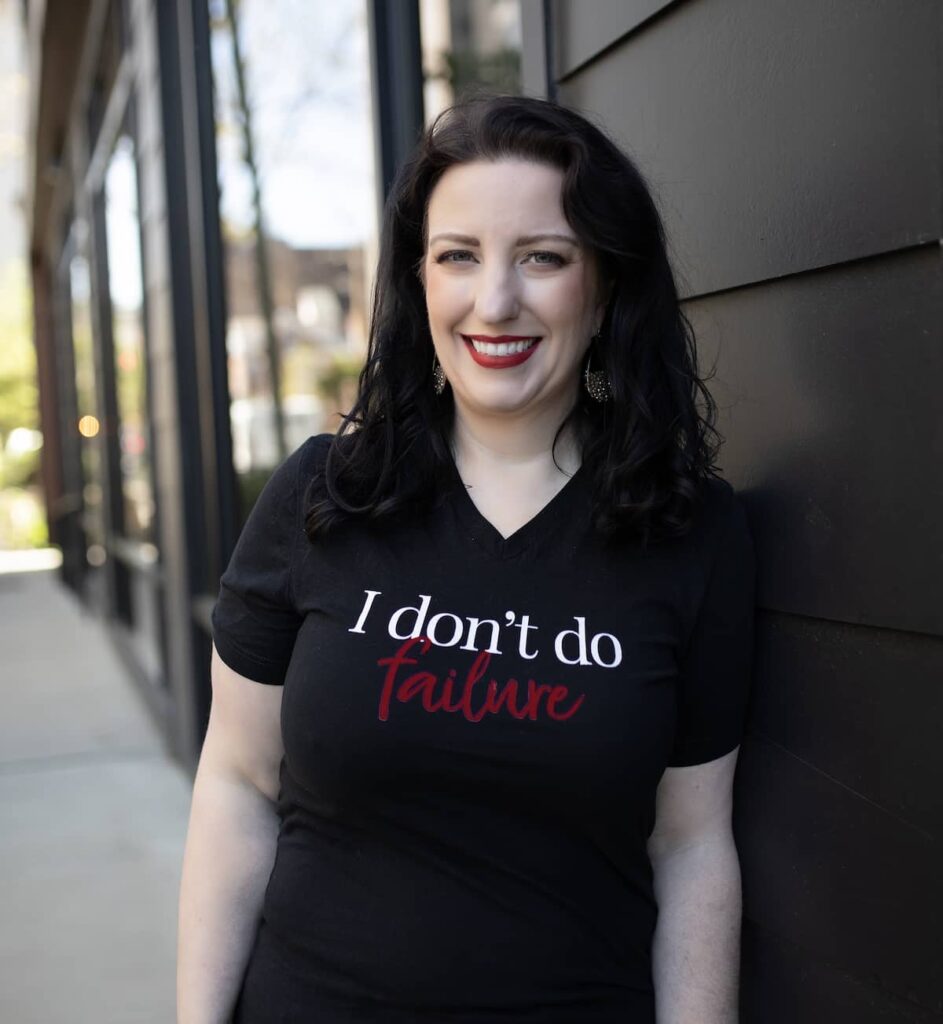
That’s a good thing that it has helped me with. But I, I know it’s not going anywhere. Part of me jumping on the bandwagon was because I saw the writing on the wall. It’s not going anywhere. And either you’re going to get left behind or you’re going to get up to speed. And I was not just like, my shirt says, it says, I don’t do failure, I don’t do failures. I wasn’t going to get left behind. And I knew that if I was going to be relevant in the space, we were going to have to talk about it.
Monica Froese [00:19:33]:
And I’m totally fine with that. I just, I want people to understand that there’s. With a lot of these things, when we go too extreme with anything, there’s a pendulum swing and that’s a good thing. It’s like human guardrails that we have. So if we go too far on this, like, it’s going to do everything for us. The humanness is going to swing back and be like, no, I don’t want to talk to your AI clone every day. I would like to talk to you as a human. Like, I hope at least people are gonna see it that way, because that’s how I see it.
Monica Froese [00:20:00]:
I don’t wanna be on this podcast right now recording with your AI clone, which we know is a thing now you can do it. And someone talked about how they sent their AI clone into meetings, and then they would be walking in the hall the next day at work and someone would come up to them and have a conversation with them, but it wasn’t them that was in the meeting. And so then she was like, now I have to get downloads at the end of the day about what my AI clone learned in the meeting that I sent her into. And my mind, I’m like, in theory, that sounds really cool. But honestly, on the receiving end, I don’t want to be in a meeting with your clone. I want to be in a meeting with you. Am I wrong here?
Ruth Poundwhite [00:20:37]:
That is wild. Honestly, there is part of my brain that when you said sending an AI clone to meetings that introverted, like, loner, part of me was like, oh, my goodness, yes. Seriously, there is such power in the human connection. There’s an energy. Not to get too woo about it, but there is an energy for us speaking. Who knows where AI is going. Maybe we’re going to feel that and we’re not even going to realize we’re talking, talking to AI, which is scary. And we are talking about some of the pitfalls of AI here.
Ruth Poundwhite [00:21:03]:
I do love it, but it’s just, it’s a new thing and it’s changing a lot. So, yeah, there’s going to be things that we need to be careful of.
Monica Froese [00:21:10]:
As we go because it’s so new. I think that’s why it’s so important to have a conversation just like this, because most of my podcasts right now are very like, woo, AI, this is great. Look at all the fun things it can do. And I still believe that, but I also want it to recenter us to remember that we still have our brains. And while we still have our brains and they’re not taking over, let’s remember this stuff and keep this in the forefront of our business. And actually, that makes me want to talk about your summit that you’re doing in September, because I don’t remember how I got involved in it. I don’t remember if you pitched me, but I remember, however I read about it, I was like, yes, because you clearly already had this in your mind that, okay, AI is great, but we also want to make sure we’re keeping that human connection. So can you tell us a little bit about the summit, what it’s about and like, how you, why you’re even doing it?
Ruth Poundwhite [00:22:04]:
I am doing it honestly, because it’s my own, a manifestation of my own personal obsession with playing around with AI, but figuring out how to do it in the right way for me, right, Figuring out how to use it as a support tool, not a replacement for my unique magic. And just my mind has been blown so many times over the last few months. And talking in our mastermind and all of this about how everyone is using, I want to bring people together and talk about this, but let’s talk about doing it in a way that does align with us as unique humans and keep that human element. So it’s called the Aligned AI Summit. We have loads of brilliant speakers talking about using AI as a support System coaching us with AI, connecting with our future goals, retaining our thought leadership. Very important. We’ve got some very creative automations that people are running and different use cases and how people are implementing it into their business models and using it to support their clients in a way that does not replace what they do, but helps them to do what they do better, if that makes sense. So, yeah, we’re talking about all kinds of things, but it’s really all tied together under this umbrella of not losing that human side and really feeling good about the way that we’re personally using it.
Monica Froese [00:23:18]:
And how many speakers do you have?
Ruth Poundwhite [00:23:20]:
I think we got about 35. Yeah. I could have had more. Oh, my goodness. Yeah.
Monica Froese [00:23:25]:
Did you accept pitches or did you go out and source people for it?
Ruth Poundwhite [00:23:29]:
No, it was all based on applications. I just had so many good ones, like, must have submitted another.
Monica Froese [00:23:34]:
I do remember it stood out to me because I’ve been talking a lot of AI summits.
Ruth Poundwhite [00:23:38]:
Yeah.
Monica Froese [00:23:39]:
Like the next person. I love all the cool use cases out there. It is so fun to experiment. I’m actually having more fun in my business now than I have in a very long time because there is so much new stuff coming out and cool things that we can try. But I love the idea that. Okay, let’s. You’re calling it Soulful, right?
Ruth Poundwhite [00:23:57]:
Like, the whole thing is basically how can we sell or build our business or whatever in alignment with our energy, personality and values? So in this case it’s how can we use AI in alignment with all of those things?
Monica Froese [00:24:09]:
Now, are you doing a presentation too for the summit?
Ruth Poundwhite [00:24:12]:
I am, but don’t ask me what I’m doing because I haven’t decided yet. I’m sure whatever, something around AI supporting me and my capacity as someone with the chronic health stuff.
Monica Froese [00:24:24]:
Let’s talk about. I’m curious now how, even if it has changed your offers, what are your offers in your business now?
Ruth Poundwhite [00:24:32]:
My main offer is the Soulful Sales Society. So I help people to sell in alignment with their energy and personality and values.
Monica Froese [00:24:39]:
You have integrated AI into that. Is that like, relatively new that you integrated AI?
Ruth Poundwhite [00:24:44]:
Let me think. I think it was a few months ago that I did a whole. But like, I created a custom GBT roadmap because it’s membership with lots of different elements. There’s a lot. So it helps people decide where to go, where to start, depending on their goals. I’ve also created a few custom GPTs to help them take action with some of the trainings that we have in there.
Monica Froese [00:25:03]:
Do you have a Lot of community interactions built into it or.
Ruth Poundwhite [00:25:07]:
Yeah, we have a group and live calls as well.
Monica Froese [00:25:11]:
How is your turnout for live calls? Have you noticed a difference with AI with more people showing up versus before?
Ruth Poundwhite [00:25:17]:
I have not noticed a difference. I will say I work with a lot of massive introverts like me, so I’m the kind of person who does not show up to the calls all the time, but I am listening and I do sometimes submit the questions. So my audience is a bit like that as well.
Monica Froese [00:25:31]:
Let’s talk about the concept of introvert because here’s something interesting. So this is the way I’ve always defined extroverts versus introverts. Extroverts derive their energy from social situations, from other people. Introverts, they get depleted by that. Like it sucks energy. So I’ve been mislabeled my whole life because I’m loud and I’m outgoing and I have no problem being in a room and being the life of the room and talking to whoever people think I’m an extra, an extrovert. I am not. If I have three calls in a day, I am completely depleted of my energy.
Monica Froese [00:26:07]:
I try, I actually try not to have calls on days I have my girls because then I don’t have energy for them after. So I’m an introvert in this class, but I just call myself like an outgoing introvert. And when I think about that, I think I feel like introverts are probably more at risk to falling into a trap with AI because it’s like a friend that doesn’t. I don’t get depleted when I. And that’s. I never thought about that before. Is that like something you’re noticing with your. The people you’re coaching because they are introverts?
Ruth Poundwhite [00:26:37]:
I haven’t actually had any specific conversations with them about that, although that is an interesting point. But I do think about it in terms of myself because I know it’s. I could just not go out and not see people. I could think that’s a good thing for me. It is not good for my mental health. Yes, I don’t want to over schedule myself, but I still do need that human connection. But I could easily just be a hermit, right? So I do think about that kind of thing in relation to myself. Like for sure, I could easily be a hermit.
Monica Froese [00:27:05]:
I noticed I was getting myself into a burnout phase a few months ago and really it was because I was rebuilding everything. Once I decided to embrace AI, I realized a lot of my stuff had to be rebuilt and that’s exhausting. And I made a comment to a friend of mine that I was on a five day stretch without my girls and I did not leave the house. And I was like, this is amazing. I didn’t leave the house. She was, I don’t think that’s necessarily healthy for you. Like, what are you talking about? This is like a dream come true for me that I don’t have to go anywhere. But she, in hindsight I’m like, I’m glad she said that to me because like even to I’m on a five day stretch right now without my kids and tonight I’m making myself go to my best friend’s house and we’re gonna swim in the kiddie pool because otherwise I honestly would not leave this house for five days.
Monica Froese [00:27:50]:
I honestly would feel like I’m not alone because I do talk to Chad all day long and I’m like, wow, that just hit me like a ton of bricks when we’re having this conversation that I’ve actually to a degree allowed chat to become a friend thinking almost like it’s a replacement for human interaction.
Monica Froese [00:28:06]:
And it’s not.
Ruth Poundwhite [00:28:07]:
Yeah, yeah, it absolutely isn’t. And just to get a bit personal for a sec, I had a really bad time with my mental health, especially last year. It has really become clear to me how important it is for me to get out of house. Cause like you, I could stay in all the time and I probably would work all time if I was on my own. And it’s really important and it’s something I have to force myself to do sometimes. As an introvert who thinks I don’t need people, I absolutely do. It’s just I need things in moderation. But yeah, yeah.
Monica Froese [00:28:37]:
Especially because in the States I will say therapy is unfortunately not all that accessible. We all know we do not have the best healthcare system and I’m fortunate enough that I have a great therapist that I am able to pay out of pocket for and I’ve had her for years, well before AI And I will never poo poo anyone that is using AI to help them with what they’re struggling with because it. We all deserve to have that kind of help. But one of the things, I also had a really tough mental year in 2024 and I am really glad I turned the corner before I introduced AI.
Ruth Poundwhite [00:29:11]:
Yeah.
Monica Froese [00:29:12]:
Because I don’t know what that would have looked like because there are use cases coming out there now. Like I was watching.
Monica Froese [00:29:20]:
I can’t remember if it was a TikTok.
Monica Froese [00:29:21]:
I consumed so much Content. Now, nowadays I never know where I watch something. But basically this girl said it led her to accusing her boyfriend of cheating on her. Like she noticed some behavioral changes in him and she started talking to Chad about it. And basically as she was talking to Chad over a couple weeks, it convinced her that his behavior was actually shady and he was probably cheating. And that wasn’t the case in this particular example. I believe what she said ended up happening was he took on a second job to help alleviate the financial stress, but he was trying to do it as a surprise to her because they were like most of us, living paycheck to paycheck. See that stuff that could have real damaging consequences to people’s life and relationships.
Ruth Poundwhite [00:30:04]:
Yeah, yeah. And I think it goes back to what we were saying before about that discernment piece. And it’s just, it’s giving us a best guess. It’s not a fact. It’s not got all the nuance of everything in our own lives. Yeah. It’s important to treat it not as the oracle, but as a kind of research tool, as a support tool. But it’s not the oracle.
Monica Froese [00:30:27]:
Yeah. Okay. That. I think that’s a really great way for people to reframe it. And even I read an article of advice where basically the person was very pro AI and like I said, like, if it’s helping you with your mental state and stuff, but this in the article, they gave a point that said when you start believing something that you’re being told by AI, go gut check yourself to your best friend, to your sister, to your mother, like actually talk to a real human about what chat is telling you, especially if it’s related into like the medical health field. Because you really don’t want to be led astray.
Ruth Poundwhite [00:31:11]:
Yeah, absolutely. And I also think there’s been misinformation on the Internet since the Internet first existed. And I have fears about AI and like, about our kids using it and like how are they going to interact with it and all of this. But at the same time, I think that the. This stuff is present when any kind of new technology comes around. These kind of fit. So it’s very important to talk about them, be mindful of them, trust ourselves, but also not be consumed by the fear of where it could go as well.
Monica Froese [00:31:42]:
Yes. And that’s because I think the biggest differentiator is Google. Okay. You go search for something and yes, you are 100% right. There’s tons of misinformation out there and not true facts, not backed up. And I think the level that chat took us to is it makes you feel like it’s your friend. So where Google is a very sterile environment, it’s not your friend, it’s not talking back to you. And you.
Monica Froese [00:32:08]:
It almost allowed us to have more discernment when we were going to different search results to determine if it was real information or not real information. And it wasn’t telling you. It was, it wasn’t acting like your friend and being like, oh, that’s the one. And I think that’s the biggest, the biggest thing people have to take away from chat is it is treating you like it’s a human, like a friend. And just because it said it doesn’t make it true. And that’s what that’s. I’ve actually had that conversation with my 12 year old because she, for studying for the last semester, she actually started using Google LM And I thought and it was really clever what they did. One of the girls in their class, she took the best notes and so they uploaded it into Google LM and it created that two way podcast.
Monica Froese [00:32:56]:
And my daughter actually studied for her test by listening to this podcast and I, so I talked to her about it. I was like, your friend took the notes in class. But did anyone fact check that a podcast that came back was actually aligned with what she put in? Because really it could go rote. You never really know. And my daughter was like, what do you mean? I’m like, just because it came out of AI doesn’t make it true. And it blew her mind. She was like, oh, I just assume. She just assumed that because her friend fed the notes to it that the podcast that came out of it would be factual.
Monica Froese [00:33:33]:
And I’m like, probably nine times out of ten or even more than that, it will be. But what happens, like what happens if they had done it on from health class or something? You know, something that had more at risk that it. Who knows what it could have told my daughter in this two way podcast. Maybe it could have assumed that she was older than 12 with what it came back with. These are just things that I was thinking. So it actually made me think as a parent now that I can’t keep her from using it. They have Google tools that they use in school and I don’t want my daughter to be behind the curve either. But I am also the parent that will let her have social media and she can ask all she wants and she’s not getting it.
Ruth Poundwhite [00:34:09]:
Yeah.
Monica Froese [00:34:09]:
So I guess we have always been more. We’ve. I feel like my ex And I have always been a little bit more strict, even though we both grew up in technology fields, which is like, maybe that’s why we are more strict, as with you, because we did grow up in technology fields. And he’s in, like, cybersecurity stuff. So he really. He knows I don’t want to keep her from it. I don’t want her to be behind it. There’s so many great ways that she can use it as study tools.
Monica Froese [00:34:31]:
But really, I. It came at me like a freight train to realize, oh, I really have to educate her now, that just because AI said it does not make it true or factual.
Ruth Poundwhite [00:34:42]:
Oh, my goodness. I don’t. I’m like my son, ever since he’s been little, it’s been like, what does your phone say about this? But it’s just they’ve been born into this world where the phone just has all the information. And yeah, it’s definitely a whole new thing that we are going to have to navigate.
Monica Froese [00:34:59]:
I remember when she was a couple years ago, so we have Google homes in our house, and she would always go up and talk to it and she would ask a question, even about her homework. She would ask it questions. I’m like, oh, it’s like little. This is like before ChatGPT. I’m like, that’s almost kind of cheating. One day I said, oh, I have to Google that. And she goes, what do you mean? And I was like, I don’t know the answer to it, so I’m going to go to Google and type it in. When she did not realize that Google was a search bar, like a website, she just thought it was the thing on her counter that gave her answers.
Monica Froese [00:35:31]:
And I remember when that happened, I thought, oh, my gosh. I’m like, I knew then, and this is well before everyone was into the AI stuff. But when that happened, I realized, wow, the way that our kids are going to consume information is completely different than how we were used to consuming information. And we were already at the dawn of the Internet. Like, I didn’t have a computer in my house till I was 12. My grandma taught me how to use DOS back in the day. It’s now I’m really aging myself. But the thing is that it’s just it When I realized that she thinks of it as like a talking friend, and now we’re layering on an actual bot that does treat you like a friend, I’m like, okay, this is.
Monica Froese [00:36:14]:
I almost feel like I had to get into it for the business anyways. But if you’re going to raise kids in this age, you really need to be involved and understand what they’re being told because it’s, it is like the wild west right now.
Ruth Poundwhite [00:36:26]:
Yeah. And it’s like you can, for example, not get your kid a phone. You cannot let them on social media, you cannot let them use whatever. They are going to come across it elsewhere. Even if I’m not saying we shouldn’t, we should control it in our own homes, but they are going to come across it. So better be informed than not 100%.
Monica Froese [00:36:47]:
That that’s the tact I take with her. Like I’m never. She’s not getting on social media herself, but her friends have it, her mom runs an online business. She knows you know what it is and, but I don’t. I always tell her, I’m like, the more you can keep not on the Internet at a young age, the better off you’re going to be. That’s basically what I tell her. And I think she, she resonated with that. But it, I keep thinking as I’m talking to you, I’m like, this is not meant to be doom and gloom.
Monica Froese [00:37:15]:
I swear. It was really just meant for everyone to put. If you’ve swung very far into AI doing everything for you, just step back, let the pendulum come a little bit back and remember our discernment and the need for human connection.
Ruth Poundwhite [00:37:31]:
Yes, absolutely. And also on a positive note, women using AI, really powerful and thinking about the society that we live in and stuff that it’s been trained on, it’s really important for women to be using it, to get productive, leg up to retraining it on the stuff that we’re using it with and the information we’re giving it and all of this stuff as well. And I feel very strongly about that. And Kinsey, who’s speaking at my Aligned AI Summit, articulated this very well in a panel I was listening to. On it was Kate Cordsmeyer’s panel in her membership about I don’t have the data, but basically it’s like a feminist issue as well. And I feel really to give back to this positive place with AI, like we can make a difference to our own lives as women, which gives us this boost in our productivity and we get to have a say in this conversation which is moving so rapidly and things are changing so quickly. And it’s really important because if we.
Monica Froese [00:38:32]:
Basically, I think where we’re going with that is we need a say in how this is developed. It can’t just be developed in a vacuum by men. Because that is. That actually would be very harmful for us. We could look back in history for a lot of reasons. Why if we’re not involved in the decision making, then we get left out of it. And we have very unique needs. And so I completely agree with that.
Monica Froese [00:38:54]:
Another reason, as I’m raising girls, I think it’s really important to be involved in the conversation. So that’s why I love that we are able to have like, I feel like this conversation was so needed just because I. It is such a positive thing in our lives, but also to stay grounded. That’s how I see this conversation. To keep us grounded with it as well.
Ruth Poundwhite [00:39:16]:
Yes, keep us grounded. Exactly, exactly. And remember that update ChatGPT had that update where it was so extra nice to you. Like, it was ridiculous. It was so obvious, that update. But I think it’s less obvious a lot of the time. But it is constantly, like feeding us compliments and saying this is the most amazing idea. Like, you are spot on with this idea, like what an incredible thing you’re creating and all of this.
Ruth Poundwhite [00:39:41]:
And it’s, let’s stay grounded. I’ll take some encouragement, but let’s stay grounded. Let’s use our discernment. Let’s trust who we were before AI and the work we did before AI. And if you’re new and if you come in the age of AI, that’s a muscle that you just gotta keep building alongside using AI as a support system as well.
Monica Froese [00:40:01]:
A hundred percent. Which is why I think it’s going to be very important for everyone to come to your summit and hear from people who are keeping these things in the forefront. So how do we sign up for your summit?
Ruth Poundwhite [00:40:13]:
I want to invite people to sign up through Monica’s link. Unfortunately, at the time of recording, I don’t know what Monica’s link is going to be, but it’s the Aligned AI Summit and I’m sure you’re going to have it in the show notes.
Monica Froese [00:40:22]:
Yes, I will definitely put it in the show notes. And it kicks off on September 8th, correct?
Ruth Poundwhite [00:40:27]:
Yes. So make sure you sign up before then because the presentations are available for a limited time from the 8th of September.
Monica Froese [00:40:34]:
Awesome. I will definitely link to your website to the summit in the show notes. And everyone go sign up now and make sure to come join us live on September 8th.
Ruth Poundwhite [00:40:44]:
Yay.
Monica Froese [00:40:44]:
Thanks, Ruth. Thank you so much. That’s a wrap on today’s episode, but your next step starts right now. If you’re serious about selling digital products and want the AI powered tools, expert strategy and real human support to make it happen. Then you need to check out the Empowered Business Society. Inside, you’ll get AI driven trainings to create and sell digital products faster, a private community for expert feedback and real time support. Exclusive access to the Monica Memo podcast.
Monica Froese [00:41:14]:
And if you go pro, you’ll get.
Monica Froese [00:41:16]:
Monthly marketing shortcuts, live Q&As, and 20%.
Monica Froese [00:41:19]:
Off of the Empowered Shop perpetually.
Monica Froese [00:41:22]:
Because smart business owners sell smarter, they don’t work harder. And the best part? You can get started for as little as $9. The best business growth happens when AI and real humans work together. Ready to make your next move? Join us inside of the Empowered Business Society. You can check us out at EmpoweredBusiness Co or board Society.
Monica Froese [00:41:42]:
See you in the next episode.

 Join now for $49/month, cancel anytime!

 How to extract your ChatGPT memory and custom GPT instructions so nothing gets left behind
 AI Page Lab is HERE!